
Kings Point, Columbia, Fordham and SUNY Maritime face off in Geneva, NY (Seneca Lake -@ Hobart William Smith) to attempt to qualify for Collegiate National Semi Finals. Top 8 teams in MAISA qualify for semi final events in either this same venue or in Long Beach California on April 26-27th.
4 April, 2008
Columbia and Fordham sailing Teams take 2 of the 4 Qualifying spots for the America’s Trophy - the First Step to qualification for the College Sailing “Show” North 1 Qualifier Results - Hobart William Smith
Some other SP published material discussed with Teams
Found in Key Word “QTipoDia ”
Sheeting tips for crewing on Dinghys (420, FJs, FSs, V-15, JY15, etc.)
1) Always manage both sheets so that you have control of the sail
Once the leeward sheet is trimmed in place, always “overhaul” or pull the slack out of the windward sheet. Depending on the boat the windward sheet may need some trim as well for a variety of reasons.
2) When sheeting the leeward sheet keep your hands close to your body, or near your torso. The mass of your body and your arms (tight/close and compact) make sheeting more efficient and easier to cleat or i.e to uncleat the sail just raise the height of your hands using the weight of your torso for leverage. A sheet will cleat and uncleat much easier under tension using angle and leverage.
3) When tacking, use the length of your arms, sometimes overhead through the tack, to help to finish pulling in the majority of the sheet. Finally return to compact with hands around your torso again.
4) Use the sheet as an extra attachment (of your body) to the boat. As you tack, keep the sheets in tension as you transition from one to the other (back-winding to an extent) - using one or both to help keep you “attached to the boat.” *for further explanation see following Qtip on boathandling
5) Sheet management on a dinghy is a critical practice for both a skipper and crew. Having a tangle or grabbing the wrong end can be costly - and this, fortunately is In YOUR Control.
As a crew overhauling immediately after a take is a great practice. People have different ideas about where to put the tail of the sheet. I like to put it forward of my front leg, outboard of the hiking strap. This can be personal preference but the key is to keep it out of your footing for the next tack.
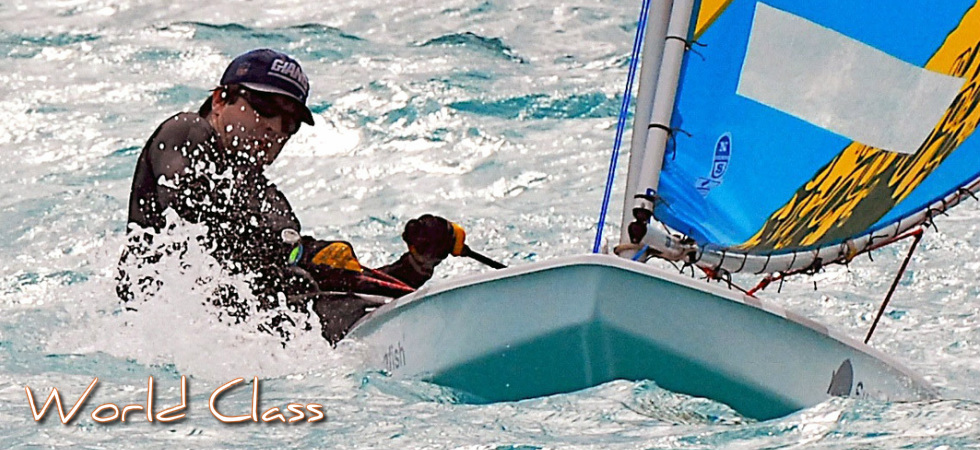
“Attachment” (being attached to the boat) - Boat handlingOne of THE most important secrets of my success in Dinghy sailing and without question in a Sunfish is adeptness and understanding of the concept of “Being attached to the boat.”
Making yourself part of the complete hull weight of the boat increases the MASS component of momentum. The alternative of being separated from the boat detracts (very quickly) from a boat’s momentum or ability to keep moving.
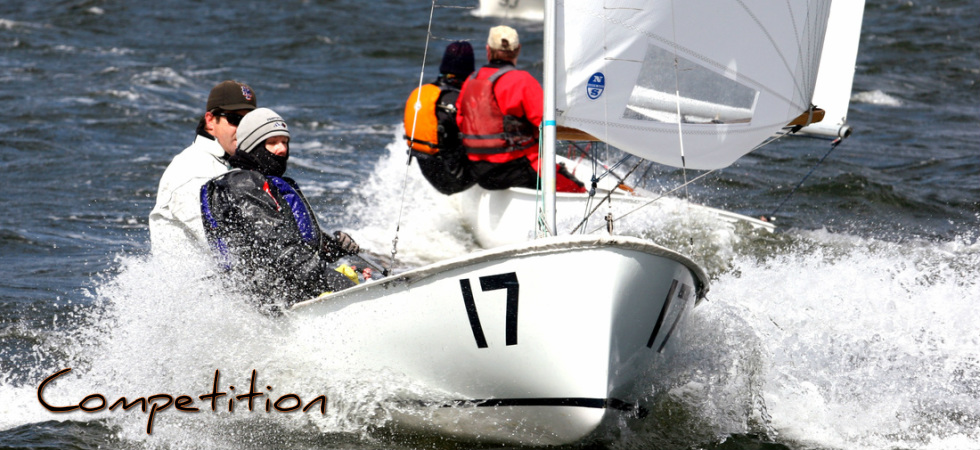
A Crew has a Pivotal (no pun intended) role in how the boat goes through the water. The crew, particularly in a two person dinghy spends a majority of time near or around the boats center of effort.
Take my word for it if you fear a “physics discussion” is about to tune you out. In a boat where the hull weight is close to “crew weight,” the overall weight (Crew + Hull) at any given time plays a huge roll in boat speed.
A few examples of how to - Stay tight to the boat :
- Lift your feet to increase tension in the hiking strap(to feet top or shins) when your not fully hiking
- Hold on to the thwart or lean tight to the rail going through a set of waves
- Lower your weight and press your toes so that your body becomes firmly pressed to the rail
- Hike with the sheet in tension even when it is cleated to add an additional point of attachment
!!! - Sail “attached” to the boat. The alternative creates instability and increases moment of inertia; and unless you do that for a purpose you’re probably “holding back” your vessel unnecessarily and unwittingly.